Men are now turning to surgery to get bigger calves
Well, maybe, but that’s really only half of the story because, according to one cosmetic surgeon, the demand for calf contouring among men has gone through the roof over the last five years. During the 90-minute procedure, fat is either harvested from the buttocks and placed back inside the subject’s calf muscles, or silicone implants are used to beef up the lower leg.
Costing up to £8,000, the procedure is now so popular that Dr Gary Ross, a plastic surgeon based in Manchester, says demand has exceeded that of buttock augmentation.
More and more men are having surgery to get bigger calves
For all those days you spend the day on your couch watching Netflix killing it in the gym, working on developing your muscles, calf muscles are the hardest area to add mass… according to The Simpsons.
But people aren’t content these days with one part of their body looking sub-standard. No, it seems like people aren’t just reserving plastic surgery for their noses and liposuction anymore.
Dr Gary Ross, a plastic surgeon based in Manchester, has said that demand in the UK has grown so much that the surgery is now more popular than bum augmentation surgery.
Has she or hasn’t she? Love Island’s Laura Crane has been keeping fans of the show guessing with regards to her full lips. Mr Ross spoke to OK magazine about the likelihood of her having had fillers.
While there is nothing to suggest Laura has had fillers, addressing the speculation, Mr Gary Ross, a plastic surgeon from Manchester, shared his expert opinion with OK! Online: “Laura has quite large lips which could be a result of lip augmentation treatments.
“It looks like she may have had some filler in her upper lip, creating the volume we see in close ups. Undergoing lip filler treatment can result in some mild swelling.”
Our next vlog discusses excess skin removal after weight loss with a mummy makeover plastic surgery. Many women develop excess skin in their abdominal region when they go through dramatic weight loss, especially after pregnancy. Therefore, they’ll be looking at ways of how to tighten loose belly skin after weight loss.
In this video, we go into more detail about how a mummy makeover plastic surgery can help to remove the excess skin removal after weight loss and how methods can be combined with the procedure for better results. Also, further details are shared on the way a breast reconstruction using fat transfer can be used to rejuvenate the breasts during the mummy makeover plastic surgery.
A case study is provided showing a patient going through a mommy makeover, with before and after pictures. In the pictures, you can see how much loose abdominal skin has been removed after the surgery has taken place. The patient also decided to have breast reconstruction using the fat transfer procedure so that her breasts appear fuller than what they originally were.
If you’d like more information on mummy makover surgery then you can get in touch by contacting us here or by calling 0161 401 4064. You can also visit our mummy makeover case study page to see more examples of results from our performed treatments.
Due to the recent pandemic of COVID-19, there have been strict measures announced by the government to ensure everybody’s safety. Therefore, we have taken up the difficult decision to close our surgery until further notice. This decision has been taken based on the government’s health guidelines.
Our main priority is to ensure your safety and the people around you. By staying at home, we can all ensure that this is the case. Therefore, all non-essential aesthetic surgery and treatments will be suspended for the time being.
During this period, we will be contacting all of our patients regarding the current situation with consultations. We will stick to the commitment to remain in contact with you during this time of uncertainty.
Please stay safe.
Are non-surgical aesthetic treatments classed as essential treatments?
Non-surgical aesthetic treatments are not essential treatments. This is the main reason why we have taken the decision to close our surgery until further notice. Although many would see these as essential treatments to improve the quality of life, this is not the case.
All businesses that provide non-surgical and facial treatments have currently suspended their practices. This is because these forms of treatments have a high risk of transmission of the Coronavirus. If you don’t adhere to the guidelines provided, you will be putting your own safety at risk as well as others around you.
Will I still be able to attend consultations with you?
Due to the current uncertainty, we have temporarily suspended face-to-face consultations. Despite this, we are still assessing options to provide virtual consultations for you. However, you must be made aware that this does not provide any guarantees in relation to your cosmetic surgery treatment. Once we have more clarity of the future, we can provide an update moving forward.
Due to these changes, we are in the process of contacting all patients we have on our list at the moment. We’ll be advising patients to cancel their future consultations and provide further guidance around them.
Once we have a process in place to provide virtual consultations, we will make you aware of this.
Are there treatments for COVID-19?
It’s always important to provide awareness in these uncertain times. However, social media platforms have unfortunately been riddled with fake news and advice also. Treatments have been offered which claim to treat for COVID-19. The WHO is currently evaluating all these treatments, checking whether they’ve been used for previous viruses or if there are any new antibody treatments.
You must take care when reading information online and not experiment with drugs that are being offered. Instead, we should only utilise the information released by the WHO and The Department of Health. As clinicians, we’ll also be doing the same when advising our patients on treatments that are available. You should not be spreading information or advice on treatments or attempt to self-treat yourself unless advised by WHO and The Department of Health.
Due to the recent pandemic of COVID-19, there have been strict measures announced by the government to ensure everybody’s safety. Therefore, we have taken up the difficult decision to close our surgery until further notice. This decision has been taken based on the government’s health guidelines.
Our main priority is to ensure your safety and the people around you. By staying at home, we can all ensure that this is the case. Therefore, all non-essential aesthetic surgery and treatments will be suspended for the time being.
During this period, we will be contacting all of our patients regarding the current situation with consultations. We will stick to the commitment to remain in contact with you during this time of uncertainty.
Please stay safe.
Are non-surgical aesthetic treatments classed as essential treatments?
Non-surgical aesthetic treatments are not essential treatments. This is the main reason why we have taken the decision to close our surgery until further notice. Although many would see these as essential treatments to improve the quality of life, this is not the case.
All businesses that provide non-surgical and facial treatments have currently suspended their practices. This is because these forms of treatments have a high risk of transmission of the Coronavirus. If you don’t adhere to the guidelines provided, you will be putting your own safety at risk as well as others around you.
Will I still be able to attend consultations with you?
Due to the current uncertainty, we have temporarily suspended face-to-face consultations. Despite this, we are still assessing options to provide virtual consultations for you. However, you must be made aware that this does not provide any guarantees in relation to your cosmetic surgery treatment. Once we have more clarity of the future, we can provide an update moving forward.
Due to these changes, we are in the process of contacting all patients we have on our list at the moment. We’ll be advising patients to cancel their future consultations and provide further guidance around them.
Once we have a process in place to provide virtual consultations, we will make you aware of this.
Are there treatments for COVID-19?
It’s always important to provide awareness in these uncertain times. However, social media platforms have unfortunately been riddled with fake news and advice also. Treatments have been offered which claim to treat for COVID-19. The WHO is currently evaluating all these treatments, checking whether they’ve been used for previous viruses or if there are any new antibody treatments.
You must take care when reading information online and not experiment with drugs that are being offered. Instead, we should only utilise the information released by the WHO and The Department of Health. As clinicians, we’ll also be doing the same when advising our patients on treatments that are available. You should not be spreading information or advice on treatments or attempt to self-treat yourself unless advised by WHO and The Department of Health.
My husband bought me a £13.5k ‘mummy makeover’, including a boob job and tummy tuck – and I’m FINALLY confident enough to take my clothes off
A MUM has revealed how her husband forked out £13,500 on a “mummy makeover” following the birth of her kids.
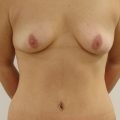
Jamie-Louise Fitton, 33, from Stockport, Manchester, underwent a tummy tuck and a breast augmentation earlier this year and said she feels like a “new woman”.
In June 2018, she underwent her mummy makeover with Dr Gary Ross at BMI Alexandra Hospital, Cheadle.
Jamie said: “I knew from the moment I met Gary he was the surgeon for me. It was a five-hour operation but I went back to work straight away.
“I think Gary is a miracle worker and I can’t believe the results he’s achieved, he’s honestly changed my life.
The Mental Health Foundation (MHF) has chosen body image as the theme for its Mental Health Awareness Week this year.
“Body image issues can affect all of us at any age. During the week we will be publishing new research, considering some of the reasons why our body image can impact the way that we feel, campaigning for change and publishing practical tools.”
The increased awareness of the impact of a negative body image on personal well being often leads to patients requesting cosmetic interventions. Recently Stephen Powis National Medical Director of NHS England has endorsed the view that providers should be officially registered and trained to spot people with body-image or other mental-health issues. For Cosmetic Surgery the Royal College of Surgeons have introduced the RCS Certification Scheme through which clinicians receive formal training as part of a professional masterclass. Patients are able to access this register in a similar manner in which those patients wishing to undergo non surgical cosmetic treatments can access the Joint Council for Cosmetic Practitioners registry.
Mr Gary Ross who became the first cosmetic surgeon to be certified through the Royal College of Surgeons in 2017 and has been using psychological screening tools for a number of years has seen an increase in patients requesting cosmetic surgery.
“There has been an increase in patients requesting cosmetic surgery in recent years and there has also been an increase in requests from patients with underlying psychological issues”
Mr Gary Ross has piloted a direct referral pathway with CBT clinics, who are a specialist nationwide provider of psychological healthcare services in order to provide an effective and efficient means of assessment for patients.
“I have been referring all young patients under 21 and all patients with a past history of psychological issues and any patient in which there has been a concern following psychological screening to CBT clinics for further assessment of their psychological needs, especially in regards to the presence of Body Dysmorphia or Eating Disorder”
“This pilot has been well received by patients and gives patients, clinicians and providers reassurances that cosmetic surgery is in the patients best interest. For many patients I believe a formal assessment should be mandatory prior to consideration of cosmetic surgery”
There is now increased awareness amongst society that there are pros/cons and risks of cosmetic procedures and the need for patients to be fully informed. The psychological risks are often overlooked and it is refreshing that the cosmetic industry is highlighting the awareness of psychological well being in order to prevent avoidable harm.
Although the majority of patients describe an improvement being following cosmetic surgery it is important that cosmetic surgery should not be seen as a quick fix and patients well being in both the short and long term need to be considered both physically and mentally.
Mr Ross adds “Through long term outcome studies we are now beginning to understand the importance of patient selection and to predict those patients who are most likely to benefit from cosmetic surgery and most importantly those patients who may be at risk”
The Mental Health Foundation (MHF) has chosen body image as the theme for its Mental Health Awareness Week this year.
“Body image issues can affect all of us at any age. During the week we will be publishing new research, considering some of the reasons why our body image can impact the way that we feel, campaigning for change and publishing practical tools.”
The increased awareness of the impact of a negative body image on personal well being often leads to patients requesting cosmetic interventions. Recently Stephen Powis National Medical Director of NHS England has endorsed the view that providers should be officially registered and trained to spot people with body-image or other mental-health issues. For Cosmetic Surgery the Royal College of Surgeons have introduced the RCS Certification Scheme through which clinicians receive formal training as part of a professional masterclass. Patients are able to access this register in a similar manner in which those patients wishing to undergo non surgical cosmetic treatments can access the Joint Council for Cosmetic Practitioners registry.
Mr Gary Ross who became the first cosmetic surgeon to be certified through the Royal College of Surgeons in 2017 and has been using psychological screening tools for a number of years has seen an increase in patients requesting cosmetic surgery.
“There has been an increase in patients requesting cosmetic surgery in recent years and there has also been an increase in requests from patients with underlying psychological issues”
Mr Gary Ross has piloted a direct referral pathway with CBT clinics, who are a specialist nationwide provider of psychological healthcare services in order to provide an effective and efficient means of assessment for patients.
“I have been referring all young patients under 21 and all patients with a past history of psychological issues and any patient in which there has been a concern following psychological screening to CBT clinics for further assessment of their psychological needs, especially in regards to the presence of Body Dysmorphia or Eating Disorder”
“This pilot has been well received by patients and gives patients, clinicians and providers reassurances that cosmetic surgery is in the patients best interest. For many patients I believe a formal assessment should be mandatory prior to consideration of cosmetic surgery”
There is now increased awareness amongst society that there are pros/cons and risks of cosmetic procedures and the need for patients to be fully informed. The psychological risks are often overlooked and it is refreshing that the cosmetic industry is highlighting the awareness of psychological well being in order to prevent avoidable harm.
Although the majority of patients describe an improvement being following cosmetic surgery it is important that cosmetic surgery should not be seen as a quick fix and patients well being in both the short and long term need to be considered both physically and mentally.
Mr Ross adds “Through long term outcome studies we are now beginning to understand the importance of patient selection and to predict those patients who are most likely to benefit from cosmetic surgery and most importantly those patients who may be at risk”
In our next vlog of the series, we look at what patients may consider when deciding whether they need a breast reduction or breast lift. The two surgeries have two different purposes despite being relatively similar. This is the main reason why patients may be weighing up what option would be best for them before they go through the surgery. Before going into more detail, let’s look at the difference between a mastopexy and breast reduction surgery.
A mastopexy/breast lift involves lifting and tightening the existing skin in the breast area. This essentially helps the breasts to appear fuller and less aged.
A breast reduction involves the removal of skin and volume from the breast tissue to make the appearance of the breasts appear smaller.
There can be some cases where rather than choosing between having a breast reduction or breast lift, patients require both in order to get the results they require. There are two case studies provided in the video; the first shows an example of a breast lift being used. There has also been breast reduction used but this is minimal to remove the outer skin and reshape the breast.
The second case study shows an example of mastopexy being used. Again, in this case, though there has also been a form of breast reduction being used too. There are several factors that are considered when choosing between a breast reduction or breast lift including whether tissue needs to be removed, the volume of breast tissue and the size of the areola complex.
In some cases, both can be used but this can be discussed during a consultation to determine what option would be best for you.