
How to look after your skin in the sun

Everyone loves to catch a lovely golden tan when the sun comes out, or when on holiday. But it’s really important to tan safely, as the sun can be extremely damaging to our skin. 

Fun Fact: Peeling as a result of sun burn is due to damaged cells committing mass suicide. 

Here we’ve listed our three top tips for achieving a golden tan safely:


  1. Always avoid sunbeds

Sunbeds give out the wrong UV to achieve a healthy tan – tanning beds pump out huge amounts of UVA and virtually no UVB (which stimulates vitamin D), and can increase your risk of skin cancer by 75%.


  1. Seek some shade


Don’t sit out all day, make sure you take regular breaks as taking breaks reduces your risk of sunburn and means your tan will be healthier and longer lasting. 


  1. Apply the right Sun cream


Don’t just rely on SPF. Keep a look out for the UVA logo on the bottle and the term ‘high’, this means that the sun cream offers a high UVA protection. 

Also, when using higher factors, make sure you don’t fall into a false sense of security. Sun cream must be re-applied every few hours in order to maintain an adequate level of protection.


Our top tips for picking the best sun cream for you:


  1. When buying sun cream, the label should have :


  • A sun protection factor (SPF) of at least 15 to protect against UBV
  • At least four star UVA protection


  1. Make sure the sun cream is not past its expiry date. Most sun creams have a shelf life of two to three years, so be sure to check the dates on your old sun creams before using them. 


  1. If you have fair skin, its important to use a high factor sun cream, such as factor 50. However, it is also important that the UVA rating is high and that you apply the sun cream every few hours.


  1. If you have darker skin, it is also important to apply sun cream even if you don’t burn. Even though your skin may not burn in the sun, it is still important that your skin is protected from the strong rays of the sun. We recommend a factor of at least 15 to protect the skin. 


It is important to remember all of these tips when spending time in the sun or buying sun cream. Everyone is keen to get out in the sun after spending all winter in the rain, yet it is so important to protect your skin from the harmful rays of the sun. following our top tips will help you to give your skin an adequate protection from the strength of the sun.
How to check your moles

Keeping an eye on your moles is a great way of increasing your confidence about what’s going on with the skin on your body. 

Moles can become cancerous over time and so it is important that we keep an eye on our moles so that any changes are detected early. 

The acronym ABCDE is really helpful when trying to remember what to look out for when checking your moles. We are looking for 5 different factors that may indicate that a mole needs reviewing to exclude melanoma.  

Asymmetry: if one half of the mole is noticeably different to the other

Border: if the mole has an irregular or undefined border

Colour: if the mole is an uneven colour or has many colours within it

Diameter: if the mole is bigger than 6mm in size

Evolving: if the mole is changing in size, shape or colour

These 5 factors are a really helpful way of keeping track of the moles on your body and can help you to feel confident about your moles. Looking out for these 5 factors means that you know what is going on with the moles on your body, and any changes you are likely to notice right away and if a mole does turn out to be cancerous, you have the best chance of catching it early. 

If you are concerned about your mole or feel that it is unsightly or wish simply to discover more about the mole removal techniques used by Mr Ross, please give us a call. We’ll be able to arrange an appointment for you at your earliest convenience to have your mole assessed.

How long should my operation take?

Many patients like to know how long an operation will take. Perhaps a better question for patients to ask would be “how long will it take to obtain an optimal result without compromising my care?” 

A study from Dallas has shown that after 3 hours of plastic surgery that the risks of complications start increasing. The chance of complications increased by over 50% by 4 hours and over 300% by 5 hours. There is no doubt that a prolonged operative time compromises patient care.


The time an operation takes is related not just to the surgeon’s ability but also to the surgical team, operating room staff and the anaesthetist. There are also inherent patient factors that affect surgical time and complex cases are often performed by more experienced surgeons with longer operative times. It is important that assessment of operative times includes some form of risk adjustment. Operative time is also not a simple refection of a surgeons technical skill but is also a reflection of his/her ability to manage the operative / surgical team. 


The term meticulous has been attributed to those surgeons who often spend longer in theatre than others. Another term would be slow. Those surgeons who are deemed to be quick are often labelled with being slapdash and not spending enough time obtaining the optimal result.  


The only way to assess optimal outcomes results is through patient derived outcome measures and validated on line reviews. Clinician related outcomes must compare these against their own revision rates / take back  / complication rates. 


Although operative time should not be a primary concern for patients – if a prolonged operative time increases complication rates then both patient and clinician outcome measures will be affected.  Therefore the question of how long an operation will take is a very pertinent question.


In Mr Ross’s cosmetic practice which includes combination surgeries, all surgery is performed in under 5 hours, >99% within 4 hours and >95% is carried out within 3 hours. In order to limit the surgical time Mr Ross has a surgical team, which may include other consultants and surgical assistants.  


Mr Ross’s validated on line reviews can easily be accessed by patients. Mr Ross’s patient / clinician feedback and revision and complication rates are also easily accessible through his website. A sample of Mr Ross’s average surgical times include: – breast augmentation 45 minutes, breast reduction / mastopexy / mastopexy implant 90 mins, facelift 120 mins, upper blepharoplasty 30 mins, rhinoplasty 75 mins, arm / thigh lift 75 mins, abdominoplasty 90 mins bodylift 165 minutes. 


Reference


Hardy KL, Davis KE, Constantine RS, Chen M, Hein R, Jewell JL, Dirisala K, Lysikowski J, Reed G, Kenkel JM.The impact of operative time on complications after plastic surgery: a multivariate regression analysis of 1753 cases.

Aesthet Surg J. 2014 May 1;34(4):614-22. 

How can I get rid of my abdominal fat?

Summer has arrived and with the hot weather comes t-shirts, shorts and skimpy bikinis. For many of us, the summer months mean fad diets and skipping meals in order to shed the pounds we’ve gained while snuggled up inside over winter. 

Achieving the perfect body is no easy task, we all want to look great, but sit ups alone aren’t going to get rid of that muffin top. There are many studies that suggest that fad diets don’t work and that diet and exercise are the only way of truly keeping your weight down. But achieving results through diet and exercise takes time; it is not a quick fix. 

There are two types of fat that are typically found in the abdomen region, these are visceral and subcutaneous fat. Visceral fat is the fat that surrounds our organs and can lead to dangerous problems such as cardiovascular disease. The amount of visceral fat we have usually reflects how healthy and active we are, a person with a healthy balanced diet who partakes in regular exercise should have little visceral fat. Subcutaneous fat is found below the skin and again can be tackled through diet and exercise. 

Getting rid of abdominal fat is no quick fix, at least not without liposuction or a tummy tuck. Trying to get rid of fat build up requires a lifestyle change: reducing portion sizes and increasing the amount of exercise you do. 

A study conducted by the BBC’s ‘Trust me I’m a doctor’ team suggests that diet and exercise really is the only way to reduce the amount of body fat we have. Increasing the amount of exercise you do, alongside reducing your portion sizes is bound to achieve results. This will, however, involve patience and consistency in order to achieve the results you want. 

Body rejuvenation techniques such as abdominoplasty and liposuction, which are the commonest plastic surgery procedures to improve body contour, should not be considered as an alternative to diet and exercise.

Visceral fat cannot be removed by plastic surgery techniques and plastic surgery can only address subcutaneous fat. Although the abdominal wall can be tightened which can improve the abdominal contour and skin excess can be removed, patients should consider diet and exercise as a critical part of all body rejuvenation surgery.

The best candidates for plastic surgery are those that have a healthy lifestyle and are weight stable and Mr Ross always advises patients to be at their ideal weight before considering plastic surgery.

Healthy Living

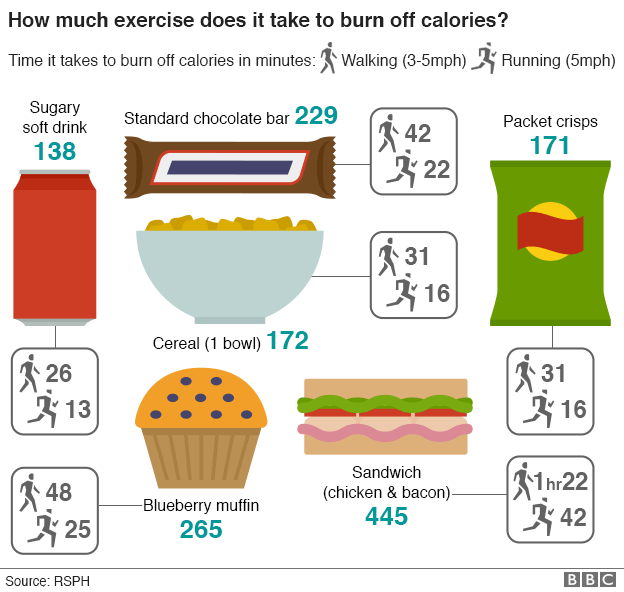
It is becoming increasingly popular for people to want correct information about their food. We want to know how many calories are in our favourite coffee from the coffee shop for example, but are we aware of how much exercise is needed to burn off these calories? The chief executive of the Royal Society for Public Health says a simple icon on food packaging could be the answer.

Their idea is that with a simple, recognisable icon, people will have better understanding of the effort needed to burn off the calories in their favourite snacks. 

The idea behind this icon is not to scare people into dieting, but rather to educate them on what they eat and how this can impact their lives. It allows people to see just how active they need to be in order to burn off their tasty treats. Encouraging people to live a healthy lifestyle can only be beneficial and can help people to have a better quality of life. 


Encouraging people to try to be more active in order to burn off their surplus calories can help them to feel good about themselves and have a positive attitude towards a healthy balanced lifestyle. 


What Is Silicone and Breast Implant Sickness?

Silicone implants have been used in plastic, aesthetic and reconstructive breast surgery since the 1960’s and have long been considered as biologically inert and harmless. 

The safety of breast implants has been extensively investigated in North America specifically related to concerns related to links with connective tissue diseases such as cancer, systemic lupus erythematosis, rheumatoid arthritis, scleroderma. 

The FDA Views

Although the FDA has shown that silicone does not cause breast implant sickness, cancer or major diseases, no-one can deny that some individuals do have allergies to silicone and silicone-related products and that there are patients who develop non-specific symptoms. The FDA has shown that there is a 1-2% link to autoimmune symptoms/conditions but this is not significantly higher than the general population. 

Social Views on Breast Implant Sickness

Silicone sickness, silicone sickness syndrome, breast implant sickness are terms used throughout social media by patients describing chronic fatigue, joint pain, and muscle soreness. 

Crystal’s Hefner was one high profile celebrity in 2016 that wrote: “My Breast Implants Slowly Poisoned Me. Intolerance to foods and beverages, unexplained back pain, constant neck and shoulder pain, cognitive dysfunction (brain fog, memory loss), stunted hair growth, incapacitating fatigue, burning bladder pain, low immunity, recurring infections and problems with my thyroid and adrenals.”

Past Statistics

The bizarre collection of symptoms has previously been described in Israel in 2015 as autoimmune/inflammatory syndrome induced by adjuvant—ASIA (Ref 1). 

Those believed to be most at risk include:-

  1. Those with prior documented autoimmune reactions to an adjuvant ie such as vaccination or implant. 
  2. Those with established autoimmune conditions such as rheumatoid arthritis, diabetes etc
  3. 75% of women had a history of allergic conditions such as eczema, hay fever, pollen and dust allergy, drug allergy, rubber or latex allergy.
  4. Those with a family history of autoimmune diseases such as rheumatoid arthritis, multiple sclerosis, systemic lupus, etc.

In addition to the genetic predisposition, environmental factors have also been linked to autoimmunity. Obesity and smoking are both examples of environmental triggers that contribute to both initiation and progression of autoimmune disorders. 

Danish Breast Implant Sickness Study 

Interestingly however a long term follow up study of Danish women who had submammry smooth silicone breast implants for an average of 19 years found no consistent differences in the seroprevalences of antinuclear antibodies or other autoantibodies ie markers for rheumatoid arthritis. The authors evaluated long-term symptoms and conditions and medication use among 190 Danish women with cosmetic silicone breast implants compared with 186 women who had undergone breast reduction surgery and with 149 women from the general population. They concluded that their breast implants did not appear to be associated with other symptoms, diseases, or autoimmune reactivity. There was however a self reported increase in hormonal replacement therapy, psychotropic medications, with an emphasis on antidepressants amongst those women with breast implants.

Concluded Evidence of Breast Implant Sickness

For those that have developed unusual symptoms that they associate with breast implant sickness / silicone sick syndrome there is no guarantee that removing breast implants will resolve the symptoms. There is also no evidence that en bloc removal of the capsules with removal of the breast implants will resolve symptoms.

Mr Ross offers en bloc removal of implants and will always send the breast implant capsule for pathological analysis so that patients can be given additional reassurance. Patients however need to be aware of the pros and cons and be empowered to make the decision to proceed with removal or not.


References 

  1. Goren I, Segal G, Shoenfeld Y. Autoimmune/inflammatory syndrome induced by adjuvant (ASIA) evolution after silicone implants. Whois at risk? Clin Rheumatol. 2015 Oct;34(10):1661-6. Epub 2015 Apr 16.
  2. Breiting VB, Holmich, LR, Brandt B, Long-term health status of Danish women with silicone breast implants. Plastic and Reconstructive Surgery. 2004; 114: 217-226.

The E Cigarette and #Plasticsurgery

The idea of an electronic cigarette (or “e-cigarette” or “e-cig”) is traced to 1963, when Herbert Gilbert filed a patent for this type of product. 

The e-cigarette delivers vaporized nicotine to the inhaler by the use of a battery-powered device. The common components of all e-cigarette devices include a power source, a heating element (atomizer), and a liquid container. The atomizer vaporizes a liquid combination of nicotine, which may contain additional flavorings. 

From a health perspective, evidence suggests that e-cigarettes are safer than traditional cigarettes because the tar is removed, and maybe as safe as other nicotine replacement products, such as gum or patches. The long-term effects of inhaling nicotine vapor are unclear, but there is no evidence to date that it causes cancer or heart disease as cigarette smoking does. Indeed, many researchers agree that e-cigarettes will turn out to be much safer than conventional cigarettes. 

However there have been reports of adverse events involving e-cigarettes including hospitalization for illnesses such as pneumonia, congestive heart failure, disorientation, seizure, hypotension, and other health problems. 

The degree of health concerns e-cigarettes cause, for plastic surgery procedures, is debatable. In these procedures, nicotine-induced vasoconstriction in the periphery may lead to a higher incidence of partial or complete skin ischemia and wound complications. Procedures involving the raising of the skin to create a flap of tissue may be those procedures most likely to be affected.  This has been proven in an animal experimental model where an experimental group of rats were subjected to subcutaneous nicotine injection followed by transverse rectus abdominis musculocutaneous flap elevation and shown to have a significantly greater area of necrosis compared with a control group.  

In terms of cessation periods a study of 102 patients undergoing general surgical procedures showed that cessation of smoking for 3 to 4 weeks’ duration before surgery reduced the incidence of postoperative complications from 41 percent to 21 percent. There is additional level 1 evidence to suggest that the optimal duration of preoperative cessation is a minimum of 4 weeks.

The recently published review article from New York from which the information above has been derived is a valuable source of information. Mr Ross agrees with the findings of this review that patients should refrain from smoking (include e-cigarettes) for a minimum of 4 weeks  prior to any plastic surgery procedure. 

Reference

Taub, Peter J.; Matarasso, Alan E-Cigarettes and Potential Implications for Plastic Surgery. Plastic & Reconstructive Surgery. 138(6):1059e-1066e, December 2016.


Prevention of Deep Vein Thrombosis and Pulmonary Embolism in Aesthetic Surgery.

The incidence of Venous Thromboembolic events such as Deep Vein Thrombosis (DVT) and Pulmonary Embolism (PE) are undoubtedly increased by surgical procedures and these events can be life threatening. 

Factors that increase risk include congenital or inherited blood clotting disorders, a family history, of DVT/PE, high BMI, previous medical conditions such as heart failure and inflammatory bowel disease and age. 

In Aesthetic Surgery patients should also be aware that incidence is increased by prolonged bed rest and sitting for long periods postoperatively. Patients should only consider surgery when they are fit and well, weight stable and have given up smoking for 6 weeks. Preoperative assessment of patients has enabled clinicians to identify patients at high risk and in Mr Ross’s practice all patients undergo a preoperative assessment that includes an assessment of thromboembolic risk.

The treatments proposed to reduce DVT / PE risks include: – 


  1. Non-pharmacological treatments include graduated compression stockings (GCS) and intermittent pneumatic compression (IPC) devices which are classified as Mechanical thromboprophylaxis devices


  1. Pharmacological agents 


Although mechanical prophylaxis devices have been evaluated extensively in clinical studies, their efficacy in Venous Thromboembolic (VTE) prevention remains unclear. These studies have often failed to define exactly what device was used. Frequently the devices were used in combination with other prophylaxis methods, making it difficult to demonstrate their efficacy. 

Mr. Ross does recommend the use of Mechanical thromboprophylaxis devices in his practice. Mr. Ross has never encountered a problem with a patient using these and believes that they do no harm. He accepts that there is limited evidence to support this practice and it is very rare for patients not to consent to having Mechanical thromboprophylaxis.

The recommended use of pharmacological venous chemoprophylaxis remains controversial. Dr Swanson who has written extensively on the prevention of venous chemoprophylaxis in plastic surgery has recently published his thoughts.

As Dr Swanson describes there may be an increased risk of bleeding for patients taking VTE prophylaxis and there is still a risk of developing a DVT / PE even in patients that take pharmacological agents. Mr Ross like Dr Swanson is concerned about the potential effect of bleeding in aesthetic and cosmetic surgery. Increased bruising and bleeding can lead to additional wound healing issues and complications. In aesthetic surgery where downtime is affected by increased bruising, patients need to weigh up this possible complication when opting to reduce the risk of DVT / PE by choosing pharmacological agents. 

As Dr Swanson maintains the key to prevention is early mobilisation of patients postoperatively. This is a key aspect of Mr Ross’s practice and every patient is mobilised immediately after surgery. In patients that are unable to mobilise postoperatively Mr Ross recommends pharmacological agents until mobilising and in Mr Ross’ practice this is given on the evening following surgery.

Currently however in Mr Ross’s practice over 95% of patients have aesthetic surgery as day cases, 23hr or short stay surgery due to improved aesthetic surgery techniques that have allowed immediate postop mobilisation. It is extremely rare for patients not to be able to mobilise immediately.

The question for patients that are mobilising on the day of surgery is whether pharmacological agents are necessary. With no specific evidence to support this decision, patients need to weigh up the risks of the pros and cons of using pharmacological agents to reduce the risks of thromboembolism. Mr Ross visits all his patients postoperatively and for patients who are unsure whether to have pharmacological agents this decision can be made on the afternoon / evening of surgery. 

Regardless of treatment method chosen by the patient all patients in Mr. Ross’s practice are advised regarding the need for mobilization and educated regarding VTE risk and the signs and symptoms of DVT/PE on discharge. Mr. Ross operates at a facility where patients can be seen 24/7 and can be investigated / treated as soon as possible. 


Reference


Swanson E.A Rebuttal of Published Recommendations for Venous Thromboembolism Prophylaxis in Plastic Surgery. Plast Reconstr Surg. 2016 Nov;138(5):951e-952e. 


What is the role of cell assisted Autologous Fat Transfer in Breast Augmentation and Breast Reconstruction?

Autologous fat transfer or fat grafting is an option for both breast augmentation and breast reconstruction to restore / enhance volume. It has been found that the key to fat graft retention is maximizing the surface area to volume ratio, and the vascularity of the recipient area. Closed systems and the method of harvest are also seen as essential steps. Reported graft retention following autologous fat transfer may vary from 40 to 75%. 

Mr Ross uses water assisted liposuction (Bodyjet liposuction) to aid the removal of fat and limit damage to fat cells during harvesting. The fat is then filtered within a closed system, therefore limiting the chance of pollution / infection prior to injection.

Proponents of cell assisted lipotransfer (CAL) have postulated that adding adipose derived stem cells to autologous fat transfer enhances angiogenesis / adipogenesis leading to improved long-term graft retention and lower post-operative complications,

A recently conducted systematic review of CAL in breast augmentation and reconstruction from the UK has been published on JPRAS open. The authors describe an overall complication rate of 37% with the most common side effect being calcification. They concluded that although a promising surgical technique there were high levels of bias, lack of control groups and lack of long-term follow-up data. They concluded that the potential concerns of CAL vs traditional autologous fat transfer have yet to be determined and all patients wishing to undergo CAL must be aware of the lack of evidence to support its use over traditional autologous fat transfer. 

Currently with a lack of evidence to support its use Mr Ross does not routinely advocate the use of CAL at the time of autologous fat transfer. 

With technical refinements and the possibility of CAL alongside water assisted liposuction, Mr Ross’s sees CAL as an exciting prospect for his patients in 2017. All patients considered as appropriate will need to be aware of the pros and cons and be happy to be part of a long term follow up clinical study and be empowered to make the decision to proceed on this basis.


Reference

Zeeshaan Arshad, Lindsey Karmen, Rajan Choudhary,
James A. Smith, Olivier A. Branford, David A. Brindley, David Pettitt, Benjamin M. Davies

Cell assisted lipotransfer in breast augmentation and reconstruction: A systematic review of safety, efficacy, use of patient reported outcomes and study quality. JPRAS Open 10 (2016) 5e20

Can I move my fat from one area to another?

When patients have liposuction treatments they must think about whether fat could be used elsewhere in the body. Traditionally patients undergoing liposuction are not offered alternatives and patients considering liposuction should consult with a plastic surgeon that can run through the pros and cons of liposuction, fat transfer and liposculpture. 

Patients are now able to benefit from technological advancements in liposuction. With the development of closed systems the fat harvested can be washed and filtered with minimal trauma and subsequently injected back into patients. Closed systems have been further refined so that fat during the washing and filtering process is not damaged. The purified fat can be transferred into other areas of the body. The key for fat transfer is obtaining a high rate of fat graft survival by using the most up to date technology and techniques.

Body jet liposuction allows the simultaneous injection of fluid at the same time as liposuction allowing the fat to be washed and filtered at the same time. With minimal trauma and in a closed system with less chance of infection the chance of improved fat survival is increased.

The fat harvested can be injected back into patients during the same liposuction operation and increases surgical time by only 15-30 minutes.  Many patients opting for liposuction should consider the benefits of autologous fat transfer for other areas of the body. 

In the face only relatively small amounts of fat are required to help volumize the face. Increasing amounts are required to provide a breast volume enhancement with very large volumes required to produce an enhancement in the buttock area. Patients need to prioritize the areas they wish to address.

It would appear that around 50% – 75% of fat will survive long term and injection techniques are continually improving in order to improve the amount of fat that will survive long term. It is important that during the liposuction component excessive fat is not harvested that can lead to irregularities from the harvested areas. Equally there is a safe limit of fat that can be injected back in one sitting in order to maximize survival.

Autologous fat transfer is increasingly being used as an alternative to both breasts and buttock implants. Patients need to be aware that the amount of volume that can be achieved is less than silicone based implants and is less predictable.


Mr Ross is able to offer the variety of liposuction techniques but for fat transfer Mr Ross prefers water assisted liposuction. Patients undergoing liposuction need to be aware of the possibility of autologous fat transfer and run through the pros and cons at a consultation. It is important that women are aware of the various possibilities and combinations so that they can be empowered to make the most appropriate decision.