The UK’s best doctors and nurses revealed by iWantGreatCare the leading provider of healthcare reviews

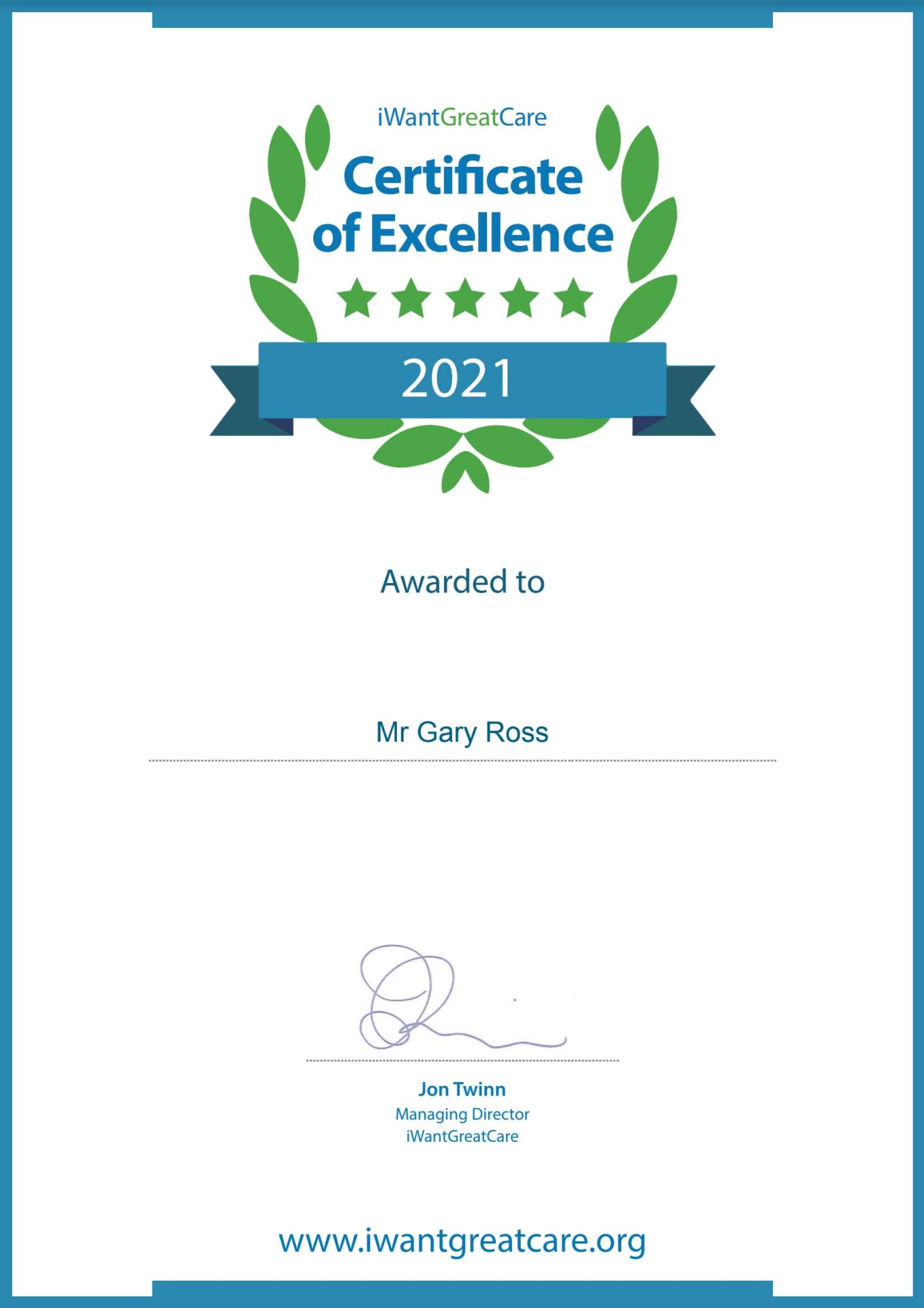
Whilst some people review their hotels and holidays on TripAdvisor, millions of patients have chosen to review their healthcare. In fact, iWantGreatCare now features 6 million reviews making it the largest independent source of patient feedback in the UK. Today, iWantGreatCare is awarding the Certificate of Excellence 2021 to those clinicians and practices who are most highly and consistently recommended by their patients.

This award is presented to leading clinicians, clinics and surgeries across the UK in recognition of the great care they deliver to their patients. Gary Ross, Consultant Plastic Surgeon in Manchester and proud winner of the Certificate of Excellence 2021 said:

“iWantGreatCare is a unique way of understanding what patients really think about the treatment and care they receive. It gives all clinicians and healthcare providers the chance to listen to what patients are telling them and see how they can continue to improve. I love getting feedback from patients and really appreciate the fact that iWantGreatCare gives all my patients the opportunity to provide feedback in a trusted and transparent way.”

Jon Twinn, Managing Director of iWantGreatCare, commented:

“It feels like the Certificates of Excellence are needed by the profession more this year than ever before. Despite the challenges of 2020, which affected patients and caregivers alike, thousands of patients across the UK continued to leave reviews every month – for doctors, nurses, GP Practices, hospitals, physios and many others. 

“It is truly inspirational to read the reviews of this year’s winners. When patients see an iWantGreatCare Certificate of Excellence, they know they will be receiving truly great care from one of the UK’s very best clinicians.”

To read the reviews of Mr Gary Ross please click https://www.iwantgreatcare.org/doctors/mr-gary-ross


The importance of Psychological Screening and the management of expectations

Mr Ross discusses the importance of Psychological Screening and the management of expectations for patients in aesthetic and cosmetic surgery. It is very important that patients are fully informed and understand the pros and cons of surgery. Patients need to be aware that surgery may not be in their best interest and be able to be offered alternative avenues.

BBC “Holding back the years” with Arlene Phillips featuring Mr. Gary Ross

Mr Ross was involved in the BBC series hosted by Arlene Phillips “Holding back the years”. Mr Ross discusses the pros and cons of facial rejuvenation and what can be achieved with the varying different surgical techniques.


Cosmetic surgery ‘should be done by specialist surgeons’

It told the BBC the current rules allowed “GPs to do nose jobs” and that was “a big problem” for patients.

The organisation wants a new system to certify surgeons for each procedure.

Bodies that represent aesthetic plastic surgeons say that they support the idea but it will only help patients if it is “mandatory and policed”.

The whole industry has been under intense scrutiny since thousands of women were fitted with sub-standard breast implants made by Poly Implant Prothese (PIP).

Read The Article here.

Mirror: Grandfather Issues Warning About Sun Danger

A GRANDFATHER-of-four who lost skin from half his head through cancer has issued a warning over safety in the sun.

Alun Smith, 85, bravely shared pictures showing the extent of his basal cell carcinoma (BCC) which cost him a dinner-plate sized section of his head, as well as his left ear.

Alun, from Mold in North Wales, warned attitudes towards tanning were creating generations of people who may find themselves struck down with skin cancer in later life.

BCC is the commonest form of skin skin cancer. Although aggressive BCCs are rare, careful skin surveillance is required for them to be picked up early.

The most common cause of BCC is exposure to the sun.

Alun said that while he has always covered up while holidaying with his family, he neglected to wear a sun hat in his younger years.

The dad-of-two suspects exposure to the sun during his national service in Singapore 65 years ago may have been the root cause of the damage.

He said: “My doctors suspect I may have got it all that time ago but it lay dormant for many, many years.

“I don’t sunbathe, I’ve never done it. But when I was doing national service I would never bother with hats. As I got older I would always wear hats when we took the children on holiday, as that would encourage them to wear them.

“The thing is with skin cancer, you’re more vulnerable in your younger years.”

“If I saw a family on the beach now I would go and tell them. Young children are very, very susceptible and you should always cover them up.

“I don’t think the sun does you any good. You see tourists in Spain and they just don’t seem to realise the damage it can do. We’ve been indoctrinated to think tans look better. You see people on TV who have deep tans, and you just don’t need it.”

Alun’s ordeal started when he found a small lump on the side of his head, which he had inspected by a dermatologist.

He explained: “It started off as a little thing on the side of my face. No exaggerating, it was a quarter the size of my little fingernail.

“In lots of skin cancer cases you have a job seeing it. The dermatologist had two or three goes but discovered it was bigger than he first thought, and wasn’t able to get it all.

“After they cut it out they did a biopsy and found it was cancerous.”

Alun then underwent MOHS surgery, which involves taking out the cancer cells while trying to spare the healthy surrounding tissue.

Alun was then referred to Gary Ross, a specialist cosmetic and plastic surgeon based in Manchester.

Mr Ross put together a crack team of specialists to rid Alun of the cancer for good. If left, it threatened to spread into his nose, eye, and even deeper towards his brain.

Alun said: “The specialists sat me down and told me the bad news. They said the previous treatments hadn’t got it all and they wanted to take my left eye and my left ear.

“I told them I wasn’t bothered about my ear, but I was quite keen on my eye.

“I was surprised. All of this came from absolutely nothing.”

Businessman Alun underwent a lengthy procedure which involved moving tissue from his cheek and scalp in order to reconstruct the defect.

A large piece of skin was also taken from his thigh and placed onto the left side of his head.

The procedure was a complete success, with all traces of the cancerous cells removed. He now has a prosthetic ear which is held onto his head by two metal clips.

Alun said: “I can’t speak highly enough of Mr Ross. He saved my life, without a doubt.

“People always ask me what it’s like but quite honestly I forget about it most of the time. It doesn’t bother me at all.

“I don’t look in the mirror and think ‘Oh Christ, I need to go out and buy a wig’. I suppose I could shave the rest of my hair off, but it doesn’t bother me one bit. And other people don’t seem to notice, either.

“To look at me, you would never know my ear was prosthetic.

“It can make quite a talking point at dinner parties.”

Alun still regularly returns to the Christie Hospital in Manchester for check-ups, and to have any new skin lesions that appear on his face removed.

BCC usually appears as a small, shiny pink or pearly-white lump with a translucent or waxy appearance.

It can also look like a red, scaly patch and occasionally some brown or black pigment within the patch. The lump slowly gets bigger and may become crusty, bleed or develop into a painless ulcer.

My Ross, who works from BMI Alexandria in Cheadle and is an Honorary Senior Lecturer at the University of Manchester, said: “Incidence of skin cancer have been steadily growing over the past decade.

“This shows just how important it is to be well educated and aware of the dangers of exposure to the sun.

“Surgery is often the best way to treat skin cancer and in Alun’s case, a significant procedure was the only option.

“We combined oncological, reconstructive and aesthetic elements to do extensive work specifically tailored to Alun.

“Stories such as Alun’s are an inspiration to other patients. Combining flaps, grafts and prosthetics can often give back patients a great quality of life and replace what has been taken away.

“This case highlights the importance of utilising the skills of different surgeons from different disciplines to obtain the optimal outcomes.

“I’m really pleased Alun’s surgery was such a success and he continues to remain fit and healthy – even enjoying rounds on the golf course.”

Last month Mr Ross became the first plastic surgeon to be officially certified under a prestigious new scheme designed to boost patient safety.

He has been certified by the Royal College of Surgeons (RCS) professional standards system, which sets-out tough industry benchmarks to help provide quality assurances for any patients looking to undergo a cosmetic procedure.

Mr Ross has a specialist interest in skin cancer, skin oncology and reconstructive options to obtain the optimal results for patients.

Full article available in the Mirror.

How to reduce stress and anxiety in your everyday life

Anyone considering cosmetic surgery needs to have minimal stress and anxiety in their lives before considering surgery. If you have suffered with stress and anxiety here are some recommendations: –

1. Speak to your GP

If you are feeling overwhelmed with stress and anxiety and this is impacting your health, then the most important thing you can do is to speak to your GP. Your GP will help you define the cause of your stress and could refer you for further treatment, such as counselling or support group help, or prescribe medication if this is appropriate.

2. Schedule in some ‘me-time’

Whether this is going for a coffee with a friend, reading a chapter of a book, going to a yoga class or treating yourself to a beauty treatment, just taking time out of your regular schedule will help you relax and gain some much-needed rest and relaxation.

3. Ask for help

Often this can be the hardest thing to do but asking for help can really help to relieve the pressure and stress from your life. If you’re struggling to juggle work and home life, you could ask a friend or family member to help out with childcare; speak to your employer about changing your work contract to flexitime or employ a cleaner to handle your household chores while you spend more quality time with your children.

4. Learn how to combat your problems

If there’s a certain person or activity which triggers your stress, then one way to tackle this is by learning a new skill to help you handle the stress more effectively. If a person at work consistently treats you like a doormat, then attending a course on assertiveness could be a way to combat this. If money worries are stressing you out, book in a session with a financial advisor for help and advice on handling your money or sign up to a bookkeeping course. Working in a job you don’t like can be very stressful, you can find out what areas you might want to focus your career on by doing volunteer work or taking a course in a subject you’re interested in.

5. Have a break from technology

Studies have shown that excessive use of technology can cause sleep disorders and symptoms of stress and depression and as many as 1 in 5 people say they feel depressed as a result of using social media sites. Try a technology detox, whether this is not checking social media for a week or not reading online news sites after 7 pm so you can avoid traumatic stories before bed. Doing something to cut down on the time you spend online should help to reduce stress levels.

Looking after ourselves can help to diminish feelings of stress and anxiety. If you’re busy with commitments at work and home, taking the time to look after yourself can soon slip way down on your ‘to do’ list. It’s so important to take a holistic look at your health and pinpoint exactly what factors in it are causing you to feel so stressed. There are options open to you and people who can help you feel in control again, whether this is something as simple as booking in for a pampering or cosmetic treatment to gain some valuable ‘me time’ or something more in depth such as a counselling sessions to get to the root of what is stressing you out.

To help combat anxiety, ask yourself these questions to help bring some logical thought to your problems:

  1. Will this problem I’m worrying about matter to me in 2 months time? If the answer is no, then you can bring some grounding to your anxiety and realise that this problem is really not that important, and in two months’ time this worrying will have been for nothing.
  2. Can I do anything about the problem I’m worried about? If the answer is no, then again you are realising that this problem is not worth worrying about and you must let the worry go.

Questions like these will help ground your anxiety in logic and will help you combat your worry and stress.

Mr Ross will always give you an honest and open opinion regarding the pros and cons of cosmetic surgery and will only offer surgery when you are empowered to make an informed decision about the pros and cons.

When is it time to get a facelift?

For many individuals, getting facelift surgery is a question of when not if. If you have decided that a facelift is in your future, remember that everyone ages in a unique way and on an individual timeline. There is no specific point at which it is clear that it is time to undergo a facelift. Nonetheless, there are specific indicators that you can watch out for to help you decide when it would be best for you to reap the benefits of this life-changing facial rejuvenation surgery.

Ageing Signs to Look For

Certain signs of ageing can be valuable indicators that it may be time for you to consider facelift surgery. These usually do not include the first signs of nasolabial folds and the early signs of facial sagging. Instead, you should be on the lookout for moderate to severe signs of facial ageing. Loosened facial muscles, deeper furrows and folds, lax skin, sagging jowls, and sagging skin and muscles on the neck may all require surgical correction with a facelift. Patients should be on the lookout for these more advanced signs of ageing in the lower face. If you have observed these things, schedule your initial consultation for facelift surgery so that Mr Ross can help you determine whether now is the right time for your surgery.

The Role of Age in Facelift Surgery Timing

Age plays an important role in determining the timing of your facelift surgery. A facelift corrects signs of ageing that typically appears in patients between the ages of 50 and 60. Therefore, most patients who undergo facelift surgery are within this age range. However, some individuals with particularly good skin laxity, favourable genetics, and a healthy lifestyle may be able to achieve their desired results by undergoing facelift surgery even into their 70s. Others with signs of premature ageing, especially those who smoke or have extensive sun damage to their skin, may be younger candidates for facelift surgery.

The right age for facelift surgery is determined by individual needs. If you think it may be time for you to get this surgery, request your personal consultation with Mr Ross today by filling out our online enquiry form.

Boob jobs gone BUST: Surgeons spending MORE time taking out implants

Boob jobs gone BUST: Surgeons spending MORE time taking out implants

Last year, four times as many women were having them removed on the NHS as having new ones.

A few years ago boob jobs were booming, with twice as many women having enlargements compared with those having implants removed.

Experts believe the reduction in enlargement operations is down to an NHS clampdown on the procedures.

Last year 1,602 women were admitted to hospital for breast implant removal compared with 390 wanting enlargement.

Twelve years ago 633 women went in to have implants out, while 1,778 were admitted for boob boosts.

Taxpayer-funded cosmetic surgery became a political issue in 2013 when it was revealed would-be model Josie Cunningham had a £5,000 boob job on the NHS to go from 32A to 36DD.

Six months later she wanted them reduced, saying they were so big they were preventing her from getting modelling jobs.

Celebrities such as Katie Price, who had enlargements that made her a 32GG, and Victoria Beckham who had a boob job to swell her bust to 34DD, have both undergone reduction procedures in recent years.

Gary Ross, a plastic surgeon in Manchester, said: “There are more removals done in the NHS, mainly due to faulty PIP implants, and women going abroad for surgery who then have problems later.”

Find out more about Gary Ross by clicking here.


Cheeky Face-lift Boom

Women are having ‘bum fat’ pumped into their faces to make them look younger.

The Procedure has been rated one of this year’s top cosmetic surgery trends.

Harvested fat cells provide volume on bony or lined areas of the face.

Plastic surgeon Gary Ross explained: The fat can be take from an area in the body and placed into the face to try to volumise the areas affected by ageing. Frequently, patients opt to have their fat injected on the bony portions of the face – usually the mid face. It can also be used for finer lines.”

Hair transplants also feature among 2017’s top surgical trends. Transplants are often being sought by women who have experienced hair loss.

The industry has seen a spike in the number of women seeking help with hair loss, said aesthetic surgeon Dr Somji.

He said: I have seen a surge due to hair extensions but this still remains most popular with men.”

Elsewhere the focus has been on having quick and convenient procedures such as one-stitch face lifts, and using lasers to zap saggy skin and wrinkles in as little as 20 minutes.

Boob jobs gone bust: Surgeons spending more time taking out implants

Last year, four times as many women were having them removed on the NHS as having new ones.

A few years ago boob jobs were booming, with twice as many women having enlargements compared with those having implants removed.

Experts believe the reduction in enlargement operations is down to an NHS clampdown on the procedures.

Surgery is now only being granted to those with significantly misshapen breasts or to women who can prove they are suffering serious psychological effects.

The number of removals has surged partly because the fashion for enormous false breasts has declined.

The scandal over French PIP silicone – where hundreds of women had potentially dangerous implants taken out – also had an effect.1

Twelve years ago 633 women went in to have implants out, while 1,778 were admitted for boob boosts.

Taxpayer-funded cosmetic surgery became a political issue in 2013 when it was revealed would-be model Josie Cunningham had a £5,000 boob job on the NHS to go from 32A to 36DD.

Six months later she wanted them reduced, saying they were so big they were preventing her from getting modelling jobs.

Celebrities such as Katie Price, who had enlargements that made her a 32GG, and Victoria Beckham who had a boob job to swell her bust to 34DD, have both undergone reduction procedures in recent years.

Gary Ross, a plastic surgeon in Manchester, said: “There are more removals done in the NHS, mainly due to faulty PIP implants, and women going abroad for surgery who then have problems later.”

Find out more about Gary Ross by clicking here.